


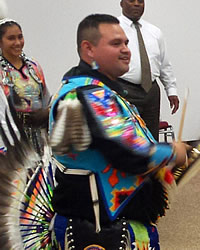

The Achumawi, a Native American tribe, historically lived in the northeastern part of California, specifically around the headwaters of the Pit River, in what is now known as the Modoc Plateau. They spoke the Achumawi language, which belongs to the Penutian language family. The Achumawi language is highly endangered, with few fluent speakers remaining today. Many Achumawi people now speak English, and efforts have been made to revitalize their native language through educational programs and language preservation initiatives.
Historically, the Achumawi were semi-nomadic, relying on a mix of hunting, fishing, and gathering for sustenance. They traditionally lived in dome-shaped houses made of reeds and bark, which could be easily dismantled and relocated. The tribe's social organization was primarily based on family units and extended kinship networks. They were closely related to the Atsugewi tribe, with whom they shared many cultural similarities, but the two groups had distinct languages and traditions.
The Achumawi were impacted by European colonization in the 19th century, facing displacement, violence, and forced assimilation policies. Despite these challenges, the Achumawi have retained much of their cultural identity and continue to celebrate their heritage through language, art, and community practices.
Today, the Achumawi people primarily reside in the northeastern part of California, within the boundaries of the Pit River Tribe. Many Achumawi live in rural areas, often on or near reservations, and maintain close ties with other Native American communities in the region. Their lives blend traditional and modern practices, with many working in agriculture, education, and local government.
While they have made significant progress in educational and economic development, many Achumawi still face challenges typical of Native American communities, such as limited access to healthcare, education, and employment opportunities. However, they are committed to preserving their cultural heritage, with the tribe actively working on language revitalization, cultural preservation, and economic self-sufficiency initiatives.
Family remains a cornerstone of Achumawi life. Many Achumawi people continue to practice traditional crafts such as basket weaving, beadwork, and the creation of ceremonial regalia. The Achumawi also have a deep connection to their natural environment, including the Pit River and surrounding areas, which remain central to their identity and cultural practices.
The religious beliefs of the Achumawi are deeply tied to their natural surroundings and animistic worldviews. They believe in a spiritual connection to the earth, the elements, and the animals that inhabit it. Traditional Achumawi religion includes a belief in a Creator figure, as well as spirits and ancestral forces that influence the natural world. They believe that the land, plants, animals, and even celestial bodies possess spiritual significance.
Traditional ceremonies, such as the "World Renewal" or "Wintu" ceremony, are central to their religious practices and often take place at specific times of the year, aligning with seasonal changes and agricultural cycles. These ceremonies are not only religious but also serve to strengthen community bonds and reinforce cultural values. Elders play a critical role in preserving and transmitting spiritual knowledge.
In modern times, many Achumawi people have adopted Christianity, either blending it with traditional beliefs or fully embracing it. Churches, including Native American congregations, are present in the region, and some Achumawi individuals participate in Christian worship alongside traditional ceremonies. The blending of these belief systems reflects the adaptability and resilience of the Achumawi people in maintaining their cultural identity while navigating external pressures.
The Achumawi face various socio-economic challenges, including high poverty rates and limited access to quality healthcare and education. Like many Native American tribes, they struggle with the legacy of historical trauma, including forced relocation, cultural suppression, and marginalization. These challenges can impact mental health and overall well-being within the community.
Language preservation is another pressing need. The Achumawi language is at risk of extinction, and there is a need for continued language revitalization programs, including the development of educational materials and the training of younger generations in their ancestral tongue.
Economic development also remains a critical area of need. While some Achumawi have succeeded in creating small businesses and securing employment within their communities, broader economic opportunities are limited, particularly for younger members of the tribe. There is also a need for improved infrastructure, including better housing, roads, and public services, particularly on reservations and in remote rural areas.
Finally, the Achumawi need the believers among them to faithfully preach the gospel, teach the whole council of God, and make disciples who make even more disciples. There is a great need for culturally sensitive Christian workers to engage the Achumawi people, graciously encouraging them to turn from animism to wholeheartedly worshiping the true and living God.
Pray that God would raise up faithful Christians from among the Achumawi people to lead and disciple other believers, forming a strong and vibrant church capable of reaching the lost around them.
Pray that the available Scripture and evangelistic materials be boldly and effectively used to communicate the hope of Christ to the Achumawi community.
Pray for churches to be planted and led by pastors who are deeply committed to the Bible and who faithfully teach and preach the whole counsel of God.
Finally, pray for the Achumawi believers, that they would wholeheartedly embrace the Great Commission and become a shining gospel light among their people and to the world around them.
Scripture Prayers for the Achumawi, Pitt River in United States.
Achumawi. Native Languages of the Americas. Accessed October 2023.
"Pit River Tribe." National Congress of American Indians. Accessed October 2023.
Martin, Joel. California Indian Heritage. University of California Press, 1987.
Silver, Shirley, and Barbara C. Reece. The Native American Experience in California. University of California Press, 1993.
Whipple, Allan. Achumawi and Atsugewi: The Pit River Indians. University of California Press, 1949.
| Profile Source: Joshua Project |



