


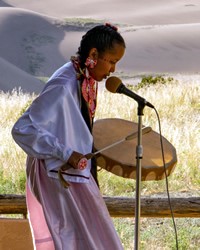

The Jicarilla Apache, part of the Eastern Apache group, speak a Southern Athabaskan language known as Jicarilla Apache. The name "Jicarilla" comes from Spanish, meaning "little basket," referencing the woven containers they traditionally used.
Historically, they lived a semi-nomadic lifestyle in the Sangre de Cristo Mountains and the plains of southern Colorado and northern New Mexico. They cultivated crops, hunted game, and gathered wild plants, learning farming and pottery from neighboring Pueblo peoples. In 1887, the Jicarilla Apache Reservation was established in northern New Mexico, later expanded to support ranching and agriculture. Despite centuries of displacement and hardship, the Jicarilla have preserved their language, traditions, and identity.
Today, the Jicarilla Apache nation is centered in Dulce, New Mexico, within a reservation that spans over 879,000 acres. The landscape ranges from high desert to mountainous forest, and tribal members engage in ranching, oil and gas development, and tourism. Cultural preservation is a priority, with programs supporting language revitalization, traditional arts, and environmental stewardship. Water holds sacred significance, and the tribe has fought to protect its rights to rivers and springs. Community life is shaped by strong family ties, seasonal ceremonies, and a deep connection to ancestral lands.
Traditionally, the Jicarilla Apache believed in a spiritual cosmology centered around Hascin, their creator deity, and ancestral figures who emerged from the underworld. Nature, animals, and celestial bodies were seen as sacred, and ceremonies honored these spiritual forces.
With colonization, many Jicarilla adopted Christianity—particularly Catholicism and Protestantism—though traditional beliefs often coexist with Christian practices. The Native American Church also has a presence, blending Christian elements with indigenous spirituality. While many identify as Christian, personal discipleship and biblical engagement are often limited, and faith may be expressed more culturally than transformationally.
The Jicarilla Apache people need spiritually contextualized outreach that understands their culture while clearly presenting the gospel. Many have inherited Christian traditions but lack access to discipleship resources that foster personal growth in Christ. There is a need for Bible translation and oral storytelling that can bridge the gap with their linguistic and cultural rhythms. Healing from historical trauma and restoration of identity in Christ are critical spiritual needs. Ministries that build trust and long-term relationships can help bridge gaps between tradition and transformation.
Pray for the revitalization of the Jicarilla language, asking God to empower efforts to translate Scripture into their heart language, ensuring that his word resonates deeply within their culture.
Pray for indigenous Christian leaders, asking that God would raise up faithful disciples who can nurture spiritual growth and guide others within their tribal communities.
Pray for healing from generational trauma, that the peace of Christ would restore their spiritual identity and bring freedom from past wounds.
Finally, intercede for ministries that are culturally sensitive, praying for efforts that acknowledge Jicarilla traditions while faithfully sharing the transformative gospel of Jesus.
Scripture Prayers for the Apache, Jicarilla in United States.
Jicarilla Apache – Wikipedia
Jicarilla Apache Nation – Keepers of the River
| Profile Source: Joshua Project |



