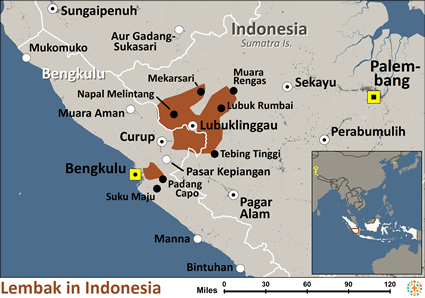

The Lembak are an ethnic group living primarily in the Indonesian provinces of Bengkulu and South Sumatra. They are also known by names such as Sindang Kelingi, Lembak Sindang Merdeka, and, in some areas, Saling. Their traditional homeland lies along the border regions between Bengkulu and South Sumatra, particularly in the valleys and foothills of the Barisan mountain range. The Lembak are closely related to neighboring Malay, Rejang, and other Sumatran peoples, yet they maintain a distinct ethnic identity and cultural heritage. Their primary language is Lembak, also known as Col, an Austronesian language related to Malay, though Indonesian is widely spoken as well.
Historically, the Lembak developed as an agricultural people living in fertile river valleys and upland farming regions. Community traditions recall an earlier political identity known as Sindang Merdeka, a territory that served as a buffer between larger regional powers. Over generations, they established villages centered on farming, family cooperation, and local customs. While modernization has brought increasing contact with the outside world, many Lembak continue to preserve their language, traditions, and strong community ties.
Agriculture remains the foundation of Lembak life. Rice cultivation is the primary occupation for many families, while others grow coffee, rubber, vegetables, fruits, and other crops. Small-scale brick-making enterprises are common in some villages, providing an additional source of income. Farming activities often involve cooperation among family members and neighbors, reflecting the community's strong emphasis on mutual support.
The Lembak family system is primarily patrilineal, though descent is recognized through both parents. Several post-marriage living arrangements are practiced, including establishing an independent household or residing temporarily with either the husband's or wife's family. Extended families play an important role in providing social and economic support. Respect for elders, family loyalty, and community harmony are highly valued.
Daily life revolves around farming, family responsibilities, religious activities, and village relationships. Traditional foods include rice, vegetables, tropical fruits, fish, and locally grown produce. Community gatherings, weddings, and religious celebrations help strengthen social bonds and preserve cultural traditions. Education is increasingly valued, and younger generations are pursuing opportunities in business, government service, and urban employment while maintaining ties to their home villages.
The Lembak are predominantly Sunni Muslims, and Islam plays an important role in shaping community life, family values, and religious practices. Mosques serve as centers for worship and community gatherings, and Islamic observances such as Ramadan and Eid celebrations are widely practiced.
At the same time, many Lembak continue to hold animistic beliefs alongside their Islamic faith. Belief in unseen spirits, sacred places, supernatural forces, and traditional healing practices remains influential in parts of the community. Some seek assistance from traditional spiritual specialists for protection, healing, or guidance. This blending of Islamic belief with older spiritual traditions creates a form of religious syncretism that continues to shape the worldview of many Lembak families.
Most Lembak have had little opportunity to hear a clear explanation of the gospel. Many know little about the biblical teaching that salvation is a gift of God's grace through faith in Jesus Christ rather than through religious observance or spiritual rituals.
The Lembak need greater access to the gospel through trusted relationships, Scripture resources in languages they understand, and faithful believers who can communicate biblical truth with humility and respect. Historical tensions between religious communities have at times created barriers to gospel witness, making long-term relationship building especially important.
Practical needs include educational opportunities, vocational training, agricultural development, and economic opportunities for younger generations. Many villages would benefit from programs that strengthen families, improve livelihoods, and provide practical assistance. Demonstrations of Christian compassion through service can help build trust and open doors for meaningful relationships.
Above all, the Lembak need opportunities to encounter Jesus Christ through God's word, understand the gospel clearly, and see transformed lives through the witness of mature believers and healthy local fellowships.
Pray that the Lembak would have many opportunities to hear a clear presentation of the gospel and understand the saving work of Jesus Christ.
Pray that God would raise up faithful workers who will build genuine relationships among the Lembak and demonstrate Christ's love through both words and actions.
Pray that the Lembak would be adopted through the People Group Adoption program so that churches and believers will commit to ongoing prayer, outreach, and future gospel engagement among them.
Pray that existing Indonesian believers who have contact with the Lembak would be strengthened in their faith and equipped to share the gospel with their own people and neighboring communities.
Scripture Prayers for the Lembak in Indonesia.
https://en.wikipedia.org/wiki/Lembak_people
https://www.prayingforindonesia.com/ethnic-groups/the-people-of-sumatra/who-are-the-lembak/
https://peoplegroups.org/people_groups/pg022510/
https://baptisttranslators.com/lembak-of-indonesia/
| Profile Source: Joshua Project |