


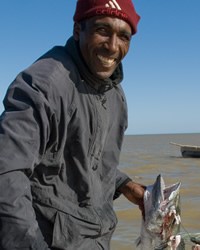

The Vezo are a coastal ethnic group living along the southwestern shores of Madagascar, particularly in the regions surrounding Toliara (Tuléar) and Morondava. Their name, "Vezo," means "to row" or "to paddle," reflecting their deep connection to the sea and their identity as skilled fishermen and seafarers. The Vezo trace their ancestry through generations of maritime tradition, with oral histories recounting migrations along the coast and the adaptation of their way of life to the rhythms of the Indian Ocean. While they share some cultural traits with other Malagasy groups, the Vezo have developed a distinct identity shaped by their environment, language, and seafaring heritage.
Life for the Vezo revolves around the ocean. Most families depend on fishing as their primary livelihood, venturing out in hand-carved wooden canoes called pirogues, often powered by sails or paddles. Men and boys typically fish for a variety of species—octopus, fish, and shellfish—using nets, lines, and spears, while women and children gather shellfish and sea cucumbers along the shore. The catch is either consumed at home or sold in local markets, providing the main source of income for many households.
Meals are simple and centered on rice, cassava, and fresh seafood, often cooked over open fires. Extended families live in small villages of thatched huts made from local materials, clustered along the sandy coastline. The Vezo are known for their resourcefulness, building boats, nets, and shelters from what the land and sea provide.
Community life is vibrant and cooperative. Villagers often work together to launch boats, repair nets, and celebrate successful catches. Social gatherings, storytelling, and music are woven into daily routines. The Vezo observe important life events—such as births, marriages, and funerals—with communal feasting, singing, and traditional dances. Respect for elders and strong family ties are central values, and children are raised with a deep knowledge of the sea and Vezo customs.
Festivals and rituals are held to honor ancestors and seek blessings for safety and abundance. The Vezo calendar is shaped by the cycles of the moon and tides, with certain days set aside for rest, celebration, or spiritual observance. Education is valued, but access to schools can be limited in remote villages, leading some families to send children to larger towns for further study.
The Vezo's spiritual life is rooted in a blend of traditional animistic beliefs and ancestor veneration. They place their trust in the spirits of ancestors, whom they believe watch over the living and influence daily events, especially those related to the sea. Rituals, offerings, and ceremonies are conducted to seek protection, good fortune, and healing. Sacred sites, such as certain trees or rocks, are believed to be inhabited by spirits, and taboos (fady) govern many aspects of daily life.
While the majority of Vezo continue to follow these traditional beliefs, there is a growing gospel presence among them. Some Vezo have come to faith in Jesus Christ, gathering for worship, prayer, and fellowship. These believers seek to live out the hope and peace found in Christ, sharing the message of salvation with their families and neighbors. The gospel offers the assurance of forgiveness and new life through Jesus, who alone has power over all spiritual forces.
The Vezo face significant physical and spiritual needs. Access to healthcare, clean water, and education is limited in many coastal villages, and families are vulnerable to poverty, malnutrition, and the impacts of environmental change such as overfishing and climate shifts. Economic opportunities beyond fishing are scarce. Spiritually, there is a need for continued outreach, discipleship, and the translation of Scripture and Christian resources into the Vezo language. Believers need encouragement and support to grow in faith and share the gospel with others.
Pray for improved access to healthcare, education, and clean water in Vezo communities.
Ask God to strengthen Vezo believers and equip them to share their faith with others.
Pray for effective translation and distribution of Scripture and Christian resources in the Vezo language.
Request that the Vezo people would experience the hope and transformation found in Jesus Christ.
Scripture Prayers for the Vezo in Madagascar.
https://www.peoplegroups.org/
https://www.operationworld.org/
https://www.ethnologue.com/
https://madagascar-tourisme.com/
| Profile Source: Joshua Project |




