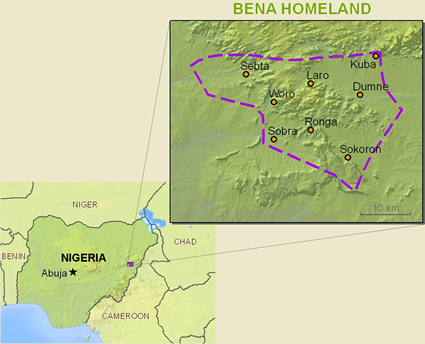

The Yungur Binna people of Nigeria, also known simply as the Yungur or Bena, are an indigenous ethnic group located in the northeastern part of the country, primarily in Adamawa State. Their homeland is characterized by rocky, rolling savannah terrain, where small communities are scattered across the landscape.
The Yungur share linguistic and cultural ties with other groups in the Adamawa region and belong to a broader cluster of related peoples. Their history has largely been preserved through oral tradition, with elders passing down stories of origins, migration, and community identity through generations.
Christian missionaries first entered their region in the early twentieth century, introducing the message of Jesus Christ and establishing an ongoing Christian presence among the people.
The Yungur Binna people live in rural communities where agriculture forms the backbone of daily life. The surrounding savannah provides land for farming and supports their livelihoods, shaping a way of life that is closely tied to the seasons and the land.
Family and clan structures play an important role in organizing society. Communities are built around extended families, and cooperation is essential for farming, conflict resolution, and social support. The people are often described as hardworking and deeply committed to their traditions, valuing unity, hospitality, and mutual care within their communities.
Their language, Bena (also called Yungur or Binna), remains a central part of their identity and is spoken widely within the community. At the same time, interaction with neighboring groups has brought cultural exchange while preserving their distinct heritage.
Most Yungur Binna identify as Christians, with Christianity having been introduced through missionary efforts in the twentieth century. However, despite this widespread identification, their understanding of the gospel is often limited.
Many believers have not had access to Scripture in their own language, and much of what they have heard about Christ has come through other languages. As a result, Jesus can seem distant, and biblical teaching may not be deeply rooted in everyday life.
There is also evidence of ongoing spiritual struggles and social challenges, suggesting that faith is not always fully integrated into personal or community life. While the name of Christ is known, the transforming power of the gospel has yet to reach many hearts in a deep and lasting way.
Scripture portions are available in their language, but a complete Bible is not yet widely accessible.
The greatest need among the Yungur Binna is for a deeper, Scripture-centered understanding of Jesus Christ. Many identify as Christians, yet discipleship and spiritual growth are still limited.
Access to the Bible in their own language is crucial. Hearing and reading God's word in a heart language would help believers know Christ more personally and apply his truth in daily life.
There is also a need for strong local leaders who can teach the Bible clearly and guide families toward spiritual maturity. Social challenges such as family instability, substance abuse, and health concerns further highlight the need for the transforming power of the gospel.
Strengthening the local church and equipping believers to disciple others would have a lasting impact across the Yungur Binna community.
Pray that Yungur Binna believers will grow in their understanding of Scripture and develop a close, personal relationship with Jesus Christ.
Ask God to provide full access to the Bible in their language and to use it to transform lives.
Pray for the raising up of faithful local leaders who will teach and disciple others.
Lift up families facing challenges such as instability and harmful behaviors, asking the Lord to bring healing and restoration.
Pray that the Yungur Binna church will become strong and active in sharing the gospel within their own communities and beyond.
Scripture Prayers for the Yungur, Binna in Nigeria.
https://en.wikipedia.org/wiki/Bena_language_(Adamawa)
https://neptuneprime.com.ng/the-yungur-people-preserving-a-quiet-legacy-of-strength-tradition-and-resilience-in-adamawas-heartland/
| Profile Source: Joshua Project |