Kongo in Uganda
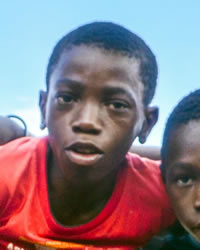
Photo Source:
jbdodane - Flickr
Creative Commons
|
Send Joshua Project a map of this people group.
|
| People Name: | Kongo |
| Country: | Uganda |
| 10/40 Window: | No |
| Population: | 6,000 |
| World Population: | 6,905,000 |
| Primary Language: | Koongo |
| Primary Religion: | Christianity |
| Christian Adherents: | 94.00 % |
| Evangelicals: | 35.00 % |
| Scripture: | Complete Bible |
| Ministry Resources: | Yes |
| Jesus Film: | Yes |
| Audio Recordings: | Yes |
| People Cluster: | Bantu, Kongo |
| Affinity Bloc: | Sub-Saharan Peoples |
| Progress Level: |

|
Introduction / History
The Kongo people are a large Bantu-speaking cultural group whose historic homeland lies in the region of the Congo River and the Atlantic coast of Central Africa. Their history includes the ancient Kingdom of Kongo, a powerful state from about the 14th century onward, which engaged in trade and cultural exchange with Europeans. Over time, through colonial disruption, slavery, and migration, the Kongo peoples spread and dispersed.
In Uganda, the presence of Kongo people is less documented as a distinct ethnic group; there are Kongo nationals (from the DRC or Republic of Congo) living in Uganda, and border-region interactions exist (for example, Kongo fishermen and Ugandan fishermen on Lake Edward). Thus, the story of Kongo in Uganda is largely of migrants or refugees, or part of trans-border cultural exchange, rather than a long-settled indigenous Ugandan people group.
What Are Their Lives Like?
The Kongo people historically centered their lives around farming, fishing, hunting, and trade. For example, they cultivate cassava, bananas, maize, beans, taro, and also raise cash crops such as coffee, cacao, and palm oil in their homeland. Their villages were often independent, each organized around clans (kanda), with matrilineal descent common in many Kongo societies.
In the Uganda context, the Kongo who live there (often as immigrants or refugees) face the challenges of adaptation; navigating new languages, settlement issues, access to jobs, legal status, and integration into Ugandan society. They may take up fishing on shared waters, small-scale trade, manual labor, or farming where possible, though facing insecurity and limited resources.
Family and clan ties remain important. Social life includes community gatherings, music, dance, and strong traditions of mutual support. Traditional arts (sculpture, wood?carving) were historically strong among the Kongo.
What Are Their Beliefs?
Traditionally, the Kongo held a spiritual worldview in which a supreme creator (often called Nzambi Mpungu) existed, ancestor spirits were active, and nature, animals, and spiritual forces interwove with daily life. Totemic and mystical practices (such as belief in animals with inner life, nkisi power figures) were part of older Kongo spirituality.
With colonialism and mission efforts, the majority of the Kongo today are Christian (particularly Catholic and Protestant), though many still hold traditional spiritual habits alongside Christian faith. In Uganda, Kongo migrants often join local churches, yet may retain cultural heritage, and require contextualized gospel ministry that respects their heart language and culture.
What Are Their Needs?
Given the Uganda context (migrant/refugee Kongo), their needs can be specific.
Many Kongo persons in Uganda may lack full refugee status or face bureaucratic hurdles; they need legal aid, identity documentation, rights protection, and safe settlement.
With migration comes a loss of traditional means; they need vocational training, job opportunities, small-business support, farming/fishing support adapted for their context in Uganda, and access to micro-finance or cooperatives.
Gospel work among Kongo in Uganda should speak to their cultural heritage—not simply transplanting generic Christian models, but using Kongo language, symbolism, arts, and heritage to help them understand and live out faith.
Many may have come from conflict zones (e.g., eastern DRC) or displacement; they need emotional, relational, spiritual healing, community building, and support for children and youth who may be vulnerable.
As a minority among minorities, the Kongo in Uganda may struggle with cultural loss, identity confusion, and marginalization. Initiatives to maintain their heritage (music, arts, community gatherings) and integration into local society would help.
Prayer Points
Pray that Kongo individuals living in Uganda will find safe, secure homes, legal status where needed, and the support they need to rebuild their lives.
Pray for God to open doors for meaningful employment, skills training, and livelihood opportunities among the Kongo people so they can flourish.
Pray for education programs that empower Kongo children and youth in Uganda—so they gain reading, writing, and hope for the future.
Pray for gospel-workers and church leaders to engage the Kongo culture with sensitivity—bridging language, heritage, and faith so that Christ's love becomes deeply understood.
Pray for strong families among Kongo communities, and for youth to avoid despair and find purpose in Christ.
Pray for unity in the church among Kongo believers, and for them to be salt and light in Africa—sharing Christ's hope with others and finding belonging.