Taliabo-Mangei in Indonesia
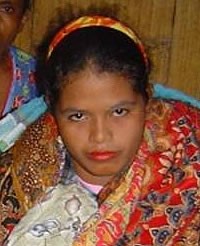
Photo Source:
Anonymous
|
Send Joshua Project a map of this people group.
|
| People Name: | Taliabo-Mangei |
| Country: | Indonesia |
| 10/40 Window: | Yes |
| Population: | 9,700 |
| World Population: | 9,700 |
| Primary Language: | Taliabu |
| Primary Religion: | Christianity |
| Christian Adherents: | 62.00 % |
| Evangelicals: | 7.50 % |
| Scripture: | Translation Started |
| Ministry Resources: | No |
| Jesus Film: | No |
| Audio Recordings: | No |
| People Cluster: | Maluku-Northern |
| Affinity Bloc: | Malay Peoples |
| Progress Level: |

|
Introduction / History
The Taliabo-Mangei people reside on the island of Taliabu Island (also spelled Taliabo) in North Maluku Province, Indonesia. Their native tongue, the Taliabu language is classified as an Austronesian language in the Central Maluku / Buru–Sula–Taliabo subgroup. Within that language, the Mangei (also spelled "Mange" or "Mangai") dialect is recognized as a distinct variant spoken by this group.
Historically, Taliabu Island lay along maritime trade routes in the northern Maluku archipelago; the people engaged in coastal fishing, small-scale agriculture, and inter-island exchange, and over time they experienced external influences including migration, mission contact, and integration into the Indonesian nation. While detailed historic accounts are scarce, the island's language and dialect distinctions reflect a long-standing settlement and cultural distinctiveness.
What Are Their Lives Like?
The Taliabo-Mangei live primarily in villages on Taliabu Island where coastal and near-coastal fishing plays a significant role, complemented by cultivation of crops suitable for island living, subsistence agriculture, and occasional trade with nearby islands and mainland centers. Given the island's remote setting, many families rely on kinship networks, communal labor, and traditional routines of fishing, gardening and boat travel. The dialectal identity of the Mangei reflects a tighter local community with its own cultural expressions, though younger generations increasingly use Bahasa Indonesia for schooling, media, and migration. Life remains framed by island rhythms—weather, sea?access, boat connectivity, and limited infrastructure—so travel, schooling and health services may be more challenging than in urban centers.
What Are Their Beliefs?
Nearly two-thirds of the Taliabo-Mangeis identify as Christian. Bible translation in their language has started, but it has a long way to go.
What Are Their Needs?
Preservation and support of the Taliabo language, particularly the Mangei dialect, would strengthen cultural identity and local communication of ideas before further generational shift occurs. Livelihood development appropriate to island and coastal living—such as improved fishing equipment, value?added coastal agriculture, and safe boat transport—would enhance stability for families and reduce forced relocation. Enhancement of education and health infrastructure that consciously respects the local language and culture would help youth remain connected to their heritage while gaining broader opportunities.
On the spiritual front, Bible translation, audio Scripture, discipleship resources and church-planting in the Mangei dialect would allow the gospel to engage deeply and meaningfully with the Taliabo-Mangei people's cultural context.
Prayer Points
Pray that the Taliabo-Mangei will experience a deep spiritual transformation, that local believers will rise to lead, and that the gospel will bear fruit in community life, church, and culture.
Pray that the Lord will raise up faithful workers who learn the Mangei dialect of the Taliabo language and gain trust among village elders in Taliabu.
Pray that Scripture and gospel resources will be produced or made accessible in the Taliabo-Mangei language so the message of Christ can enter their hearts.
Pray for new livelihood opportunities that honor island and coastal traditions, enabling families to thrive in their homeland rather than migrate away.
Pray for the youth of the Taliabo-Mangei community to embrace their heritage and language, while being empowered in education and health to serve their people.