Taman in Myanmar (Burma)
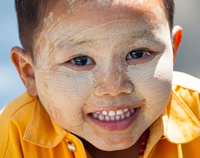
Photo Source:
Asia Harvest-Operation Myanmar
|
Send Joshua Project a map of this people group.
|
| People Name: | Taman |
| Country: | Myanmar (Burma) |
| 10/40 Window: | Yes |
| Population: | 34,000 |
| World Population: | 34,000 |
| Primary Language: | Burmese |
| Primary Religion: | Buddhism |
| Christian Adherents: | 0.60 % |
| Evangelicals: | 0.30 % |
| Scripture: | Complete Bible |
| Ministry Resources: | Yes |
| Jesus Film: | Yes |
| Audio Recordings: | Yes |
| People Cluster: | Hani |
| Affinity Bloc: | Tibetan-Himalayan Peoples |
| Progress Level: |

|
Introduction / History
Taman people inhabit western Myanmar's Sagaing Region. For centuries their main center has been the village of Tamanthi, situated within Homalin Township on the right bank of the Chindwin River. Tamanthi is the gateway to a huge wildlife reserve containing more than 30 species of mammals, including elephants, gaur, black bears, leopards, tigers, and rhinoceros.2 The village is also near the planned multi-purpose Tamanthi Dam. About three centuries ago, "gardens were planted in Tamanthi, and other nearby villages in the area produce pickled tea."3 The Taman have long been recognized as one of Myanmar's ethnic groups.
Not to be confused with the unrelated Tamang people of Nepal, the Taman no longer appear on most lists of groups in Myanmar, although they retain their ethnic identity. Because Christian research tends to be dominated by linguistics, people groups like the Taman that have lost their language have been forgotten, as language is often used as the sole qualifier of whether a group exists or not. Early scholars suggested the Taman were a mix of Burmese and Shan people.4
The Taman language is now extinct. By the 1930s it was functionally dormant, although the last known Taman speaker died as recently as the 1990s. News of the demise of the Taman language led to a spike in interest by scholars. In 2016, a Japanese linguist found an 83-year-old woman who could still remember some Taman phrases and a short song, but nothing else.5 Today, all that remains of the Taman language is a list of 75 words collected in 1911. Most Taman speakers have shifted to using Burmese or Tai Laing.6
The Taman say they originally came from China. When "a flood drowned most of them, the survivors fled to the hills before again descending to the plains where they settled near Tamanthi."7 A key turning point in Taman history occurred when their homeland was attacked by Kachin raiders in the 18th century. The Taman fled in different directions and over time were absorbed into the groups they lived among. Another tribe, the Malin, lived near the Taman but no trace of them can be found today. A 1934 article said: "The Tamans and Malins have now almost ceased to exist as separate tribes. They have become Shan-Burmans, have adopted their dress and Buddhism, and are intermarrying with them freely."8
A 19th century missionary explained the plight of tribes such as the Taman as they feel the weight of assimilation: "They are poor and scattered everywhere and are divided in every direction: at the sources of the waters, and in the glens above them. When they fall among the Burmese, the Burmese make them slaves. So, they live on one stream beyond another…. Further, the young females have to secrete themselves and blacken their faces; for if they do not, Burmese officers will drag them away and make them prostitutes. Young females dare not appear openly."
What Are Their Lives Like?
Village life is central to the Taman way of living. They typically reside in small, rural communities where extended families live in close proximity and maintain strong relational ties. Cooperation is essential, and community members often assist one another with farming activities, house construction, and other labor-intensive tasks. Leadership is generally provided by respected elders who help guide decisions and preserve social order.
Their homes are simple and constructed from materials readily available in their environment, such as bamboo, wood, and thatch. These structures are well suited to the terrain and climate, reflecting a practical approach to daily living. Life for the Taman people is physically demanding, with much of their time devoted to cultivating fields, gathering forest resources, and maintaining their households.
What Are Their Beliefs?
For countless generations the Taman were animists who served a host of demons. A visitor in 1911 observed: "They profess Buddhism, but have hardly, if at all, begun to forsake their earlier religion. They are regarded with some fear by their neighbors on account of their supposed magical powers."
Missionaries struggled to make inroads with the gospel among the Taman both before and after they lost their language. Because the Taman no longer appear on most Christian lists, few people have heard of this group or have prayed for their salvation. The Taman people remain unevangelized and unreached, although a small number are believed to be Christians today.
What Are Their Needs?
Due to their relative isolation, the Taman have limited access to modern services such as education, healthcare, and infrastructure. As a result, many aspects of their traditional lifestyle have been preserved. However, gradual change is occurring as increased interaction with surrounding groups introduces new ideas and opportunities.
Prayer Points
Pray for loving and dedicated Christian workers to go to Taman communities.
Pray that they will embrace and understand the Word in Burmese.
Pray for them to understand that God is their protector and provider.