Khmer, Northern in Thailand
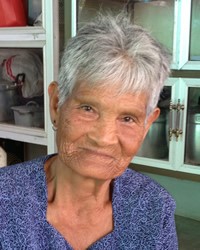
Photo Source:
Kathi Hayes
|
Send Joshua Project a map of this people group.
|
| People Name: | Khmer, Northern |
| Country: | Thailand |
| 10/40 Window: | Yes |
| Population: | 1,495,000 |
| World Population: | 1,500,600 |
| Primary Language: | Khmer, Northern |
| Primary Religion: | Buddhism |
| Christian Adherents: | 0.50 % |
| Evangelicals: | 0.10 % |
| Scripture: | Complete Bible |
| Ministry Resources: | Yes |
| Jesus Film: | Yes |
| Audio Recordings: | Yes |
| People Cluster: | Mon-Khmer |
| Affinity Bloc: | Southeast Asian Peoples |
| Progress Level: |

|
Introduction / History
The Khmer Empire once ruled parts of what is now Thailand, leaving behind Khmer communities whose descendants are known today as the Northern Khmer. Over the centuries, they put down roots in Thailand and gradually became integrated into Thai society. Today, they live mainly in the northeastern Isan region and parts of eastern Thailand along the Thai-Cambodian border in Prachinburi province.
Beginning in the 1930s, Thailand promoted a strong nationalist identity, and members of the ruling elite at times portrayed the Northern Khmer as "degenerate Thais," reinforcing negative stereotypes about them. Longstanding tensions between Cambodia and Thailand added to this stigma. Authorities even required Northern Khmer communities to destroy religious texts and prohibited the use of Khmer in religious settings. Over time, Khmer came to be regarded as a local dialect rather than a distinct language.
In this environment, many younger Northern Khmer came to distance themselves from Cambodia and emphasize their Thai identity. Older generations have often retained a stronger sense of Northern Khmer identity, while remaining cautious about expressing it publicly. For many, identifying primarily as Thai has also brought practical social and economic advantages. Thai-medium schooling and media are drawing younger people toward Thai, and in many villages parents now speak only Thai with their children.
What Are Their Lives Like?
Today, few Northern Khmer speakers can read or write their native language, since teaching in public schools is exclusively in Thai. It's possible they are losing their language, but they are not entirely losing their culture. Their food is distinctively Khmer, with the popular somlor (soup) and liberal use of prahok (dried, fermented fish). Music also enriches their culture, with the Khmer violin and pleng kantrum (Khmer folk song) at the center of village life and celebrations. The Northern Khmer dress much like the Thai but with distinctive colors and patterns in their sarongs.
In Thailand, many Northern Khmer individuals work as migrant laborers, particularly during the dry season, where they find jobs at construction sites in Bangkok and in fruit and sugarcane plantations across the country. Numerous young people from the region are currently employed in factories in and around Greater Bangkok.
The Northern Khmer are traditionally rice farmers, following the rhythm of the monsoon which can be notoriously fickle, with one village able to plant crops while another suffers from drought. They are also skilled timber cutters and house builders, and many Khmer women weave silk and cotton cloth during the dry season. Due to a lack of groundwater, only small-scale agriculture is possible, apart from raising cattle or buffaloes.
What Are Their Beliefs?
Outwardly, they are followers of the Thai national religion of Theravada Buddhism, with a strong admixture of spirit worship and divination. Many still turn to spirit doctors and diviners, especially for illness, though more people now use them only as a last resort. As well as Buddhist festivals, the Khmer hold a festival for the spirits of the dead known as Prachum Ben. Most houses have a spirit shelf near the house and another inside on which the khruu, a monk, places items for worship.
What Are Their Needs?
In Thailand, the Northern Khmer lags in terms of educational success, and alcoholism among both men and women gives rise to major problems in many families. They need the hope of the gospel!
Prayer Points
Pray for family-based movements to Christ to soon transform Northern Khmer society, blessing them spiritually and economically.
Pray that the Lord blesses the Northern Thai people abundantly, so they may recognize him as the only one worthy of praise and worship.
Pray the hearts of the Northern Thai people would hunger after God and drink of living water.
Pray for the Lord to move in the hearts of local believers to give up their rights and sacrifice their lives to see the Northern Thai people blessed by the work of Jesus Christ, the only savior.