Charrua in Argentina
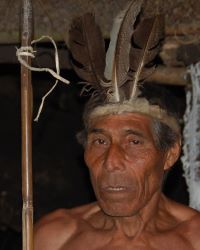
Photo Source:
Eduardo Amorim - Flickr
Creative Commons
|
Send Joshua Project a map of this people group.
|
| People Name: | Charrua |
| Country: | Argentina |
| 10/40 Window: | No |
| Population: | 17,000 |
| World Population: | 19,000 |
| Primary Language: | Spanish |
| Primary Religion: | Ethnic Religions |
| Christian Adherents: | 20.00 % |
| Evangelicals: | 3.00 % |
| Scripture: | Complete Bible |
| Ministry Resources: | Yes |
| Jesus Film: | Yes |
| Audio Recordings: | Yes |
| People Cluster: | South American Indigenous |
| Affinity Bloc: | Latin-Caribbean Americans |
| Progress Level: |

|
Introduction / History
The Charrua are an indigenous people group living in the extreme southern part of South America. Although they have been largely decimated, they consider themselves a nation, even having their own flag. They are the descendants of fierce warriors who resisted the invasion by the Spanish and were the subjects of a near-successful genocide by the early rulers of Uruguay, as well as attacks by the Jesuits.
Historically, they were seasonal nomads whose movement was determined by environmental factors. They were hunter-gatherers who also fished, living in the grasslands. They used bolas, stones connected by short ropes that were thrown to ensnare prey, as well as bow and arrows. They were a warrior culture known for their fearlessness. They had a strong social organization based on chieftainship. Living in simplicity, they were small mobile groups who never built big cities but lived in roundish-shaped tents made of animal hides.
The Charrúa are renowned for their fierce resistance to the encroachment of the Spanish.
What Are Their Lives Like?
Today, sports teams adopt their names as a symbol of strength. There are now two organizations (NGO's) working to conserve their knowledge and culture, and surviving families have come out of hiding. Most now speak Spanish as their primary language.
What Are Their Beliefs?
The Charrua are animists who venerate the moon, the spirits of nature and of their ancestors. Shamans serve as their intermediaries with the spirit world. Some also observe a syncretic form of Roman Catholicism, combining Catholic and local animistic traditions and rituals. Some observe festivals in which they parade a statue of the Virgin Mary through the streets. Cutting themselves in mourning for the death of a family member is widely practiced.
There are some Christ followers among them that God can use to extend his kingdom into the hearts of Native Americans.
What Are Their Needs?
Although discrimination against indigenous peoples officially ended in 1988, many cases of it continue, and use of 'put-down' language to describe indigenous groups is very common. They need to learn how to maintain their own identity while also fitting into modern culture.
They also need to maintain a healthy pride in their identity, while also recognizing their need for Christ. Emotional and spiritual healing from the wrongs that have been done to them, some of those wrongs in the name of religion, also seems essential to their well-being.
Prayer Points
At present evangelical churches are small but growing. Pray that God will bring spiritual renewal and raise up a strong, vital church among the Charruas.
Since most of the Charrua's contacts with groups calling themselves Christian has been hurtful and negative, pray that they will come into contact with loving Christians who value them as people made in God's image.
Pray the Charrua will become hungry to know the Creator God, and that they will see the impotence of other spirits.
Pray that they will come to understand that only Jesus Christ can serve as our intermediary with God, and that he is sufficient.