Charrua in Uruguay
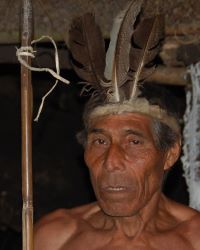
Photo Source:
Eduardo Amorim - Flickr
Creative Commons
|
Send Joshua Project a map of this people group.
|
| People Name: | Charrua |
| Country: | Uruguay |
| 10/40 Window: | No |
| Population: | 2,000 |
| World Population: | 19,000 |
| Primary Language: | Spanish |
| Primary Religion: | Ethnic Religions |
| Christian Adherents: | 15.00 % |
| Evangelicals: | 2.00 % |
| Scripture: | Complete Bible |
| Ministry Resources: | Yes |
| Jesus Film: | Yes |
| Audio Recordings: | Yes |
| People Cluster: | South American Indigenous |
| Affinity Bloc: | Latin-Caribbean Americans |
| Progress Level: |

|
Introduction / History
The Charrúa people, historically known as a semi-nomadic indigenous group, once inhabited the grasslands of present-day Uruguay and parts of Argentina and Brazil. Their original language belonged to the Charruan family, though it has largely disappeared and been replaced by Spanish.
The Charrúa were known for their fierce resistance to colonial forces, particularly during the 19th century. A tragic turning point occurred in 1831 during the Massacre of Salsipuedes, when the Uruguayan army killed many Charrúa. Despite this, descendants of the Charrúa continue to live in Argentina and Uruguay, preserving aspects of their cultural identity through oral traditions and community efforts.
What Are Their Lives Like?
Today, most Charrúa people live in urban or semi-rural environments, primarily in Argentina and Uruguay. They speak Spanish and participate in the broader national cultures while maintaining a distinct ethnic identity. Their lifestyle has shifted from traditional hunting and gathering to modern occupations, although some communities still engage in small-scale agriculture and artisan crafts. Cultural revival efforts are underway, with increasing interest in reclaiming ancestral practices, language fragments, and spiritual traditions.
What Are Their Beliefs?
The Charrúa people practice a syncretized form of folk Catholicism, blending Catholic rituals with indigenous animistic beliefs. Historically, they worshipped a pantheon of deities, including Guayubirá, the creator god, and Aña, the moon goddess. These spiritual elements continue to influence their worldview, even as formal religious affiliation leans toward Catholicism. Rituals tied to nature, fertility, and ancestral spirits are still observed in some communities, reflecting a deep connection to their pre-colonial cosmology.
What Are Their Needs?
Access to culturally sensitive education remains a significant challenge, especially for younger generations seeking to reconnect with their heritage. Economic opportunities are limited in many Charrúa communities, leading to cycles of poverty and migration. Recognition and legal protection of indigenous identity and land rights are also pressing concerns, as many Charrúa descendants lack formal acknowledgment by national governments.
Prayer Points
Pray that the Charrúa people would encounter the transformative love of Christ in ways that honor their cultural identity.
Ask God to raise up local leaders who can share the gospel in culturally relevant ways and disciple others within their communities.
Pray that they will look only to God to provide for their physical and spiritual needs.