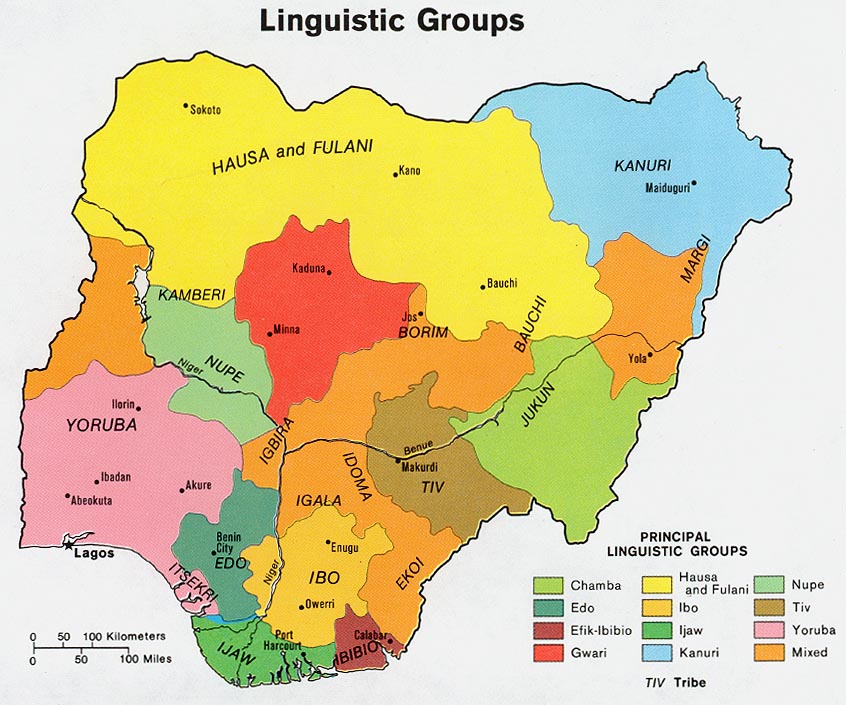
The Gvoko (AKA, Nggweshe) people live in northeastern Nigeria. Historically they fled to the hills to resist the Fulani Islamic holy wars.
Most of the Nggweshe are farmers who raise peanuts, maize, and millet on hillside terraces. A man's work includes farming, crafting leather, making baskets, spinning, weaving, and building. Women make clay objects, train the small children, prepare the meals, and do other household activities. Most Nggweshe believe in a single god who is the creator of all things and who keeps his creation in order. They believe that this god only intervenes with his creation when order has been disturbed. The Nggweshe do not pray to this god, but rather to their ancestors, who they believe will intercede on their behalf. The Nggweshe believe that the Earth is the "mother goddess" who has birthed all other supernatural beings, including thunder and lightning, black snakes, crocodiles, and certain inanimate objects.
Although the Nggweshe have shown some interest in Christian teachings, only a small percentage have accepted Jesus as their Savior. A few of the ethnic groups in the area are being targeted by mission agencies, others have no missionaries working among them. Only a few groups have portions of the Bible written in their language. The Nggweshe people must have the Bible translated in their own language to know that the Creator is not an impersonal god, but rather a loving Savior who cares for them and wants their freedom from slavery to the spirits.
Some have become Muslim and wear traditional Islamic dress; however, the majority are split between traditional religious beliefs they have held for centuries and Christianity.
Most of the Nggweshe have never heard a clear presentation of the gospel. Additional evangelistic materials are needed.
Pray for the Holy Spirit to prepare and send African missionaries to the Nggweshe community to disciple them in the ways of Christ.
Pray for Nggweshe disciples to make more disciples.
Pray for a complete New Testament in their language.
Scripture Prayers for the Ngoshe Sama, Nggweshe in Nigeria.
Anonymous
| Profile Source: Joshua Project |