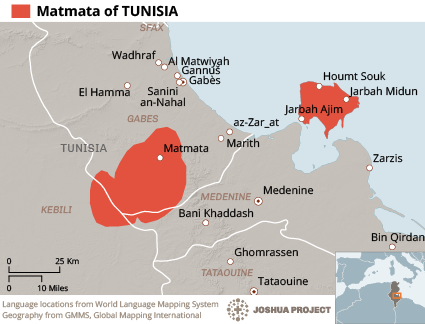

The Imazighen, also known as Berbers, are the indigenous people of North Africa. The singular term for Imazighen is Amazigh. They are a strong and proud people. The very name Imazighen is often translated to mean "free or noble men." There are several Imazighen languages, one of which is Taznatit. Thus, we will call them the Taznatit Imazighen. Most live in Morocco, but there is also a sizable population in Tunisia.
There were Imazighen people from North Africa present in Jerusalem at the day of Pentecost. The church was established among Imazighen in the early centuries of Christianity, and some of the great North African church fathers were of Imazighen heritage.
When Islam swept through North Africa in the 7th century, many pockets of the Imazighen tried to fight the invasion. They resisted Islam's advance ten different times in history, outwardly saying they would become Muslims, but then returning to their villages and refusing to practice the religion. They intentionally built conspicuous white mosques at the top of the mountains to deceive Muslim invaders. As they passed, seeing the mosque in the distance, Arabs would assume the village had already converted and continue their journey.
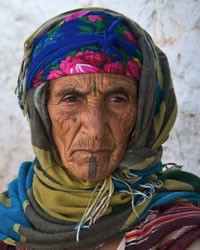
Early Imazighen generations kept their Christian heritage in secret and outwardly submitted to Islamic rule. The symbolism of the cross can still be found throughout Imazighen architecture, designs on handmade carpets, and even tattoos on women's faces. Today, however, they have no understanding of their Christian heritage.
One thing that makes the Taznatit different from their Imazighen counterparts is the degree to which men and women mix socially. The men of the city view women as equal coworkers with men in life, and it is their right to work as men do. The Taznatit Imazighen do not have problems with their Arab neighbors. They live close to them, but the Arabs prefer not to work with the Imazighen due to their differing religious perspectives on Islam.
From childhood, they speak Taznatit, an Amazigh language, and learn to write it. There is an association in their town that exists to encourage people to learn to write the language. In addition, they speak Arabic and French. They use audio-visual media such as radio and TV, and some use the internet.
Taznatit Imazighen are Ibadi Muslims, following the Ibadi school of Islam. Their denomination distinguishes them from the majority of Tunisian Muslims who follow the Maliki school. Ibadi Muslims believe that the real Muslim is the one who practices, not just in word, but also in deed. They are considered peaceful people who generally do not look down on other Muslims. Other Muslim denominations, conversely, may look down on and sometimes persecute Ibadi Muslims. The rest of Tunisian Muslims, of the Maliki school, see the Ibadi Imazighen as outsiders.
Muslims follow the teaching of Mohammed, who lived in the 6-7th centuries in Saudi Arabia. They believe in one God, whom they call Allah (Arabic for "the God"). At judgment day, all people will be judged for their deeds and, if their good works outweigh their bad, then Allah will welcome them into paradise. If not, then they will be sentenced to eternal hell. To obtain salvation, they must follow the five pillars of Islam: pray five times a day, fasting from dawn to dusk during the month of Ramadan, giving to the poor, and, if possible, a pilgrimage to Mecca, to be done at least once in their lifetime (Hajj). Regarding Jesus, they believe that he was a prophet, but that his teachings are inferior to those of Mohammad.
Taznatit Imazighen have put their identity in the Islamic religion and their nationality. They need an identity based on the King of kings who gave his life to give them eternal life.
Pray for bold and loving witnesses of Christ's grace and glory.
Pray for their elders to have dreams and visions of the risen Christ that will open this community to Jesus.
Pray for the Taznatit Imazighen to be blessed beyond measure as they learn to follow the Lamb of God who takes away the sins of the world.
Pray for disciples who will make more disciples.
Scripture Prayers for the Amazigh, Matmata in Tunisia.
| Profile Source: Joshua Project |