


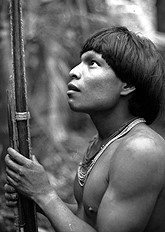

The Barí people, also known as Motilón Bari, speak the Barí language, which belongs to the Chibchan language family. Their history traces back to the Tairona culture of northeastern Colombia and western Venezuela, where they have inhabited the Catatumbo River basin for centuries. In the 16th century, the Barí mounted fierce resistance against Spanish colonizers, including expeditions led by Alonso de Ojeda and Ambrosius Ehinger, ultimately defeating several incursions and earning the derogatory name "Motilones," meaning "shaved heads," due to their traditional hairstyle. Oil exploration activities from 1913 to 1926 and again from 1996 to 2001 severely diminished their ancestral lands to just 7 percent of their original territory, exacerbating conflicts with external interests. Peaceful contact with outsiders began in 1960 through ethnobotanist Roberto Lizarralde, whose work on local plant knowledge was continued by his son Manuel, revealing the Barí's extensive use of 80 percent of Amazonian flora for medicinal and practical purposes. Missionary Bruce Olson established further relations in 1962, fostering cultural exchanges that led to literacy programs, schools, and medical clinics managed by the Barí themselves.
Today, they live primarily in Colombia and Venezuela, but a small number are in the U.S.
The Barí in Colombia lead lives centered on rainforest horticulture, where they cultivate cacao as their primary crop and export it to fund essential community infrastructure such as schools, health clinics, and gathering centers. Families live in extended kin groups within indigenous reserves like Reserva Indígena Motilón-Barí in Colombia and the Sierra de Perijá in Venezuela, practicing rotational slash-and-burn agriculture alongside hunting and gathering to sustain their diet of plantains, cassava, and wild game.
A distinctive cultural feature is their system of collective fatherhood, in which a child can have multiple acknowledged fathers from the mother's lovers during pregnancy, a practice believed to boost child survival rates by distributing caregiving responsibilities across the community. Traditional knowledge of biodiversity remains integral to daily routines, with men often handling hunting and woodworking while women manage gardening and child-rearing, though many now incorporate Western tools and clothing into their routines.
The Barí predominantly adhere to Christianity, with about 95 percent identifying as Catholic and blending elements of their ancestral animism into their faith practices. They recognize one supreme creator God, known in their mythology as the source of life and the natural world, and perform rituals involving offerings to spirits associated with rivers, forests, and ancestors to ensure harmony and prosperity.
Missionary influences since the 1960s have introduced biblical teachings, leading to widespread conversions and the establishment of indigenous-led churches that emphasize community worship and moral guidance drawn from both traditional stories and Christian scriptures.
Land tenure security remains a pressing concern as ongoing threats from oil extraction and deforestation continue to erode their territorial integrity and cultural heritage. Enhanced educational opportunities, including bilingual programs that preserve the Barí language, would empower younger generations to navigate both traditional and modern economies effectively. Sustainable healthcare access, particularly for maternal and child services in remote reserves, is vital to address high vulnerability to tropical diseases and improve overall community well-being.
Pray for believers among the Barí to seek a profound encounter with the Holy Spirit and ignite a passion for Scripture and authentic worship free from cultural syncretism.
Pray for indigenous leaders to have God's wisdom and boldness to mentor youth in discipleship.
Pray for revival that transforms family structures and relationships through Christ's love, fostering forgiveness and unity amid historical traumas.
Scripture Prayers for the Motilone, Bari in Colombia.
https://en.wikipedia.org/wiki/Bar%C3%AD_people
http://www.native-languages.org/bari_culture.htm
https://www.onic.org.co/en/indigenous-people/3236-bari
| Profile Source: Joshua Project |



