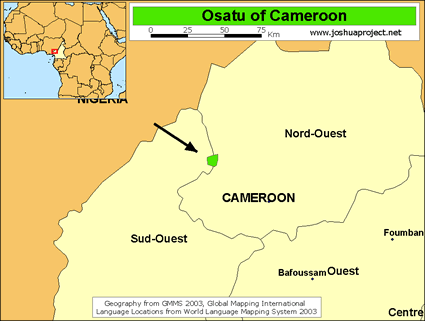
The Osatu are a small ethnic community found in Cameroon, primarily associated with rural settlements in forested regions where many smaller Bantu-related groups live. Limited widely published information exists about their detailed historical record, but like many peoples in southern and central Cameroon, their origins are closely tied to long-standing patterns of migration, clan-based settlement, and interaction with neighboring ethnic groups over generations.
The Osatu language is part of the broader linguistic diversity of Cameroon, a country known for its hundreds of distinct languages. In daily life, Osatu speakers may also use more widely spoken languages such as French or English, depending on the region, as well as regional trade languages used for communication between ethnic groups.
Historically, communities in this part of Cameroon were shaped by pre-colonial kinship systems, colonial administration under German, French, and British influence, and later integration into the modern Cameroonian state. These transitions affected governance, education, religion, and mobility, gradually connecting Osatu communities more closely with national systems while still preserving local identity and customs.
Most Osatu families live in rural villages where daily life is closely connected to agriculture and the natural environment. Farming is the main source of livelihood, with households cultivating staple crops such as cassava, plantains, maize, yams, and vegetables. Work is often organized around family units, with men, women, and children each contributing to planting, harvesting, and processing food.
In some areas, people also engage in small-scale trading, hunting, gathering forest products, or working in nearby towns for seasonal income. Local markets serve as important spaces for exchange, not only of goods but also of information and social connection between neighboring communities.
Family and kinship relationships are central to Osatu life. Extended families often live in proximity, and responsibilities are shared across generations. Elders are typically respected for their wisdom and guidance, while children grow up learning practical skills through participation in daily household and farming activities.
Community life often includes storytelling, music, and participation in social gatherings such as weddings, funerals, and seasonal celebrations. Although modern influences such as schooling, mobile communication, and migration to urban centers are increasingly present, many Osatu households continue to maintain strong ties to rural traditions and communal living.
Christianity is present among the Osatu people, and many communities have access to Catholic or Protestant churches within or near their villages. Church attendance, prayer, and Christian festivals are part of religious life for a portion of the population, and Christian teaching has influenced many aspects of social and moral life.
At the same time, some individuals and families continue to hold traditional religious beliefs that emphasize the presence of spiritual forces, ancestral influence, and unseen powers believed to affect health, protection, fertility, and success. These beliefs are often expressed through rituals, consultation with spiritual intermediaries, or customary practices passed down through generations.
In many cases, Christian identity and traditional beliefs exist side by side, with individuals participating in church life while still relying on older spiritual frameworks during times of difficulty or uncertainty. As a result, religious understanding may vary widely within communities, ranging from active Christian faith to blended belief systems.
Although the message of the gospel is present in many areas, continued teaching and discipleship are needed so that individuals may grow in a clear understanding of salvation through Jesus Christ and develop a faith grounded fully in biblical truth.
Many Osatu communities face challenges related to limited infrastructure, including access to healthcare, education, clean water, and reliable transportation. Rural isolation can make it difficult for families to reach essential services, particularly during emergencies or seasonal weather changes.
Economic opportunities are often tied to subsistence farming and informal labor, which can be vulnerable to environmental conditions and market instability. Improved agricultural support, vocational training, and access to broader economic networks could help strengthen long-term stability for families.
Spiritual growth and discipleship remain important needs within communities where multiple belief systems influence daily life. Churches would benefit from continued support in biblical teaching, leadership development, and Scripture engagement that is accessible and culturally meaningful.
As Osatu believers grow in their faith, there is also opportunity for them to contribute to broader gospel outreach within Cameroon, especially among neighboring communities that have limited exposure to the message of Christ.
Pray for improved access to healthcare, education, and economic opportunity for Osatu families living in rural areas.
Pray that those who continue to trust in traditional spiritual practices will come to know the power and salvation found in Jesus Christ.
Pray for church leaders and Christian workers to faithfully disciple believers and strengthen local congregations.
Pray that Osatu believers will grow into a strong witness for Christ within Cameroon and other parts of Africa.
Scripture Prayers for the Osatu in Cameroon.
https://www.britannica.com/place/Cameroon
https://www.ethnologue.com
https://peoplegroups.org
https://www.worldatlas.com/articles/ethnic-groups-of-cameroon.html
https://en.wikipedia.org/wiki/Cameroon
| Profile Source: Joshua Project |