


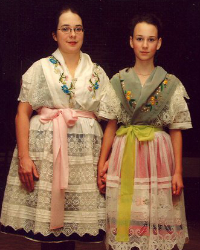

The Lower Lusatian Sorb people, also known as Lower Sorbs or Wends, are a West Slavic minority living primarily in Lower Lusatia, a historic region in the German state of Brandenburg. They are closely related to the Upper Sorbs of neighboring Upper Lusatia but have developed their own linguistic and cultural traditions over many centuries. The term "Wend" remains in common use in Brandenburg and reflects an older name historically applied to Slavic peoples living in central Europe.
The ancestors of the Lower Lusatian Sorbs settled in the region more than a thousand years ago. Although German expansion gradually brought Lusatia under German political control, the Sorbs preserved their identity, language, and customs despite long periods of assimilation pressure. Their history includes times when the use of their language and public expression of their culture was discouraged or restricted. Nevertheless, families, churches, schools, and cultural organizations helped sustain a distinct Lower Sorbian identity.
Today, the Lower Lusatian Sorbs are recognized as one of Germany's historic national minorities. Their continued presence serves as a reminder of the cultural diversity that has existed in central Europe for centuries.
Most Lower Lusatian Sorbs live much like their German neighbors, participating fully in modern society while maintaining elements of their unique heritage. They are found in villages, towns, and cities throughout Lower Lusatia, especially around the area of Cottbus (Chó?ebuz). Family life, education, employment, and community activities form the foundation of daily life.
The Lower Sorbian language remains one of the most important expressions of their identity. It is a West Slavic language related to Polish, Czech, and Upper Sorbian. Although German is now the dominant language in most settings, schools, cultural programs, media outlets, and language revitalization efforts seek to encourage the use of Lower Sorbian among younger generations.
Traditional customs continue to be valued. Community festivals, folk music, traditional dress, and seasonal celebrations help strengthen cultural identity. One well-known tradition is Zapust, a pre-Lenten festival that brings together families and villages through music, dancing, and community gatherings. Decorative arts, including the painting of Easter eggs, also remain important cultural expressions.
Historically, the Lower Lusatian Sorbs have been predominantly Protestant, while many Upper Sorbs have traditionally been Roman Catholic. Churches played a significant role in preserving community life and, in some areas, helped maintain the use of the Sorbian language. Christian holidays and church traditions continue to influence many aspects of Lower Sorbian culture.
As in much of eastern Germany, secularism has become increasingly common. Many people identify with Christianity through family history or cultural tradition but have limited involvement in church life. The social changes of the twentieth century, including decades of communist rule, contributed to declining religious participation in many communities.
The Lower Lusatian Sorbs have access to Scripture and a long Christian heritage. However, many need a deeper understanding of the gospel and a growing personal relationship with Jesus Christ. Churches that faithfully teach God's word have opportunities to encourage spiritual renewal, discipleship, and Christ-centered living.
One of the greatest challenges facing the Lower Lusatian Sorbs is the preservation of their language. Lower Sorbian is considered one of Europe's most endangered minority languages, and the transmission of the language from one generation to the next has weakened significantly. Many organizations are working to strengthen language education and promote its use in homes, schools, media, and public life.
Like many rural communities in Europe, Lower Lusatia faces economic and demographic changes that can draw younger people away from traditional communities. As a result, maintaining strong cultural institutions and community networks remains an important concern.
Spiritually, the Lower Lusatian Sorbs need vibrant churches that clearly proclaim the gospel and help believers mature in their faith. Christians within the community have opportunities to demonstrate the love of Christ, strengthen families, and serve as witnesses in a society where many people have little connection to active Christian faith.
Pray that the Lower Lusatian Sorbs will experience spiritual renewal and a deeper understanding of the gospel of Jesus Christ.
Pray that churches among them will faithfully teach God's word and make committed disciples.
Pray that younger generations will value their heritage and use their gifts to serve both their communities and God's kingdom.
Pray that efforts to preserve the Lower Sorbian language and culture will be successful.
Pray that believers among the Lower Lusatian Sorbs will become an active part of the global mission force, helping bring the good news of Christ to peoples with little or no gospel witness.
Scripture Prayers for the Sorb, Lower Lusatian in Germany.
Domowina – Lusatian Sorbs
Domowina – The Sorbian Language
Minority Secretariat Germany – The Lusatian Sorbs
Encyclopaedia Britannica – Sorb
Encyclopaedia Britannica – Lusatia
Smithsonian Center for Folklife and Cultural Heritage – The Zapust Tradition in Lower Lusatia
| Profile Source: Joshua Project |




