


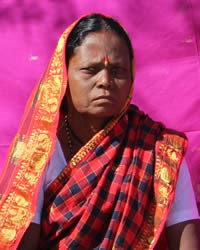

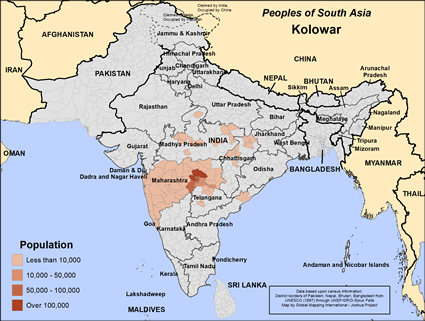
The Kolowar are a tribal community found mainly in the Indian states of Maharashtra and Telangana, with smaller populations in nearby regions. They are associated with the Kolami-speaking tribal peoples of central India. The name "Kola" is connected with bamboo or stick work, reflecting the community's traditional involvement in bamboo crafts and forest-based occupations. The Kolowar are recognized among India's Scheduled Tribes, a classification historically associated with social and economic marginalization within Indian society.
Historically, many Kolowar families lived in forested and rural areas where agriculture, bamboo work, and manual labor formed the basis of daily life. Over generations, they developed close-knit village communities shaped by tribal customs, local leadership councils, and dependence on the natural environment. While modernization has brought change, many Kolowar still live in rural areas with limited infrastructure and economic opportunity. Their language and cultural traditions continue to distinguish them from surrounding caste-based Hindu communities.
Most Kolowar families depend on agriculture, farm labor, forest-related work, and daily wage labor for survival. Some continue making baskets and bamboo products used for farming, storage, and household purposes. Women commonly assist with agricultural labor alongside household responsibilities. Economic hardship is common in many villages, especially where employment opportunities remain limited.
Family and community ties are important within Kolowar society. Marriages are generally monogamous, and family leadership traditionally passed to sons after the death of the father, though social patterns have gradually become more flexible in some communities. Village councils often help settle disputes and preserve tribal customs. Many communities continue to rely on traditional herbal remedies and local healers, especially in areas where modern healthcare is difficult to access. Literacy and educational attainment remain limited in many Kolowar villages, particularly in remote areas.
Meals commonly include millet, rice, lentils, vegetables, and locally available foods. Seasonal festivals, family gatherings, and village ceremonies remain important social events that strengthen community identity and preserve traditional customs.
The Kolowar primarily follow Hindu traditions mixed with tribal and folk religious practices. Religious life often includes reverence for local spirits, village deities, ancestors, and regional Hindu gods and goddesses. In many communities, spiritual beliefs are closely tied to nature, agriculture, health, and protection from unseen spiritual forces. Rituals and offerings may be performed during harvest seasons, family ceremonies, sickness, or times of crisis.
Unlike many Hindu communities in India, the Kolowar traditionally bury their dead rather than cremate them. Folk religious practices and tribal customs continue to shape much of their worldview alongside broader Hindu influence. Fear of harmful spirits, curses, and supernatural powers can remain deeply rooted in village life. Though some gospel recordings and Christian resources exist in the Northwestern Kolami language, many Kolowar still have little understanding of the biblical gospel or salvation through Jesus Christ alone.
The Kolowar need improved access to education, healthcare, clean water, stable employment, and infrastructure in rural tribal areas. Limited literacy and economic opportunity continue to affect many families. Remote communities may also struggle with inadequate medical care, transportation difficulties, and dependence on unstable seasonal labor.
Spiritually, the Kolowar need faithful gospel witness in the Kolami language and in culturally understandable forms. Many have never heard a clear explanation of repentance, forgiveness, grace, and eternal life through Jesus Christ. Because tribal communities are often relationship-oriented, long-term discipleship, oral Bible teaching, Scripture access, and consistent Christian presence are especially important. Existing believers among tribal groups in the region also need encouragement and training so they can effectively reach neighboring peoples with the gospel.
Pray that the Kolowar people will hear and understand the gospel clearly in their own language and respond to Jesus Christ in faith.
Pray that God will raise up faithful local believers and church leaders who can disciple Kolowar families and establish biblically grounded churches among them.
Pray that Kolowar communities facing poverty, limited healthcare, and low educational opportunities will receive practical help and lasting hope.
Pray that the Kolowar people will be adopted through the People Group Adoption program so that ongoing prayer, evangelism, discipleship, and church planting efforts will continue among them.
Scripture Prayers for the Kolowar in India.
https://peoplegroups.org/explore/GroupDetails.aspx?peid=41251
https://en.wikipedia.org/wiki/Kolami_language
https://en.wikipedia.org/wiki/Scheduled_Tribes_and_Scheduled_Castes
https://indiafacts.org/tribal-groups-central-india/
| Profile Source: Joshua Project |





