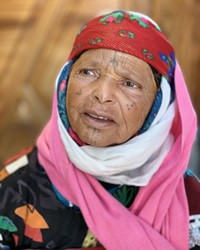

The Imazighen, also known as Berbers, are the indigenous people of North Africa. They are a strong and proud people. The very name Imazighen is often translated to mean "free or noble men". There were people from North Africa present in Jerusalem at the day of Pentecost. The church was established among Imazighen in the early centuries of Christianity, and some of the great North African church fathers were of Imazighen heritage.
When Islam swept through North Africa in the 7th century, many pockets of the Imazighen tried to fight the invasion. They resisted Islam's advance ten different times in history, outwardly saying they would become Muslims, but then returning to their villages and refusing to practice the religion. They intentionally built conspicuous white mosques at the top of the mountains to deceive Muslim invaders. As they passed, seeing the mosque in the distance, Arabs would assume the village had already converted and continue their journey.
Early Imazighen generations kept their Christian heritage in secret and outwardly submitted to Islamic rule. The symbolism of the cross can still be found throughout Imazighen architecture, designs on handmade carpets, and even tattoos on women's faces. Today, however, they have no understanding of their Christian heritage.
Tunisia's first president following French colonization, Habib Bourguiba (1957), worked hard to unify the country. Imazighen villages were traditionally fortified in strong mountain areas. Bourguiba incentivized the Imazighen to abandon their cultural identity in exchange for one "Tunisian Arab" identity. At first, he tried to build cities and communities down in the plains to force integration and to draw the Imazighen out of their strong mountain fortifications. When they refused to comply, he burned their books, removed their language from schools, and worked to erase much of the culture.
The 2011 Revolution that ousted the country's second president (Zine El- Abidine Ben Ali) from power sparked a renewal of the Imazighen culture and identity. Renewed pride and freedom to identify as Imazighen has resulted in many clubs, cultural centers, and organizations focused on retaining and building the Amazigh language and culture.
The Imazighen of Gafsa live in the sub-province of El Sened in central Tunisia. We will call them Gafsa Imazighen. They are more likely to speak Tunisian Arabic than a local language.
The way of life of the Gafsa Imazighen people differs greatly from the other groups around them, especially the urbanized Bedouins. The Imazighen in Gafsa are known for being tidy and organized as opposed to the Bedouins whose way of life is viewed as disorderly. The Gafsa Imazighen feel the Bedouins have taken their land and unjustly rule over them. Gafsa Imazighen livelihood comes primarily from jobs in private professions as well as civil servant jobs. Some also work in manual labor.
They believe in one God, whom they call Allah (Arabic for "the God"). At judgment day, all people will be judged for their deeds and, if their good works outweigh their bad, then Allah will welcome them into paradise. If not, then they will be sentenced to hell. They are expected to follow the five pillars of Islam: prayer five times a day, fasting from dawn to dusk during the month of Ramadan, giving to the poor, and, if possible, a pilgrimage to Mecca, to be done at least once in their lifetime (Hajj).
Specifically, the Gafsa Imazighen follow the Ibadi school of Sunni Islam. Their denomination distinguishes them from the majority of Tunisian Muslims who follow the Maliki school. Ibadi Muslims believe that the real Muslim is the one who practices, not just in word, but also in deed. They are considered peaceful people who generally do not look down on other Muslims. Other Muslim denominations, conversely, may look down on and sometimes persecute Ibadi Muslims. The rest of Tunisian Muslims, of the Maliki school, see the Ibadi Imazighen as outsiders.
Muslims follow the teaching of Mohammad, who lived in the 6-7th centuries in Saudi Arabia.
Regarding Jesus, they believe that he was a prophet, but that his teachings are inferior to those of Mohammad. Furthermore, the Bible is far less accurate than the Koran.
There are few opportunities to hear and respond to the gospel in Tunisia. That country has almost no Christ followers to take the only savior to the Gafsa Imazighen people.
Pray for the Lord to thrust out dedicated workers to the Gafsa Imazighen.
Pray for the Holy Spirit to give dreams and visions to family leaders among each Amazigh group.
Pray for Imazighen disciples in Tunisia to make more disciples.
Scripture Prayers for the Amazigh, Gafsa in Tunisia.
| Profile Source: Joshua Project |