


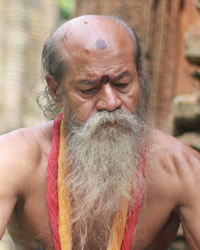

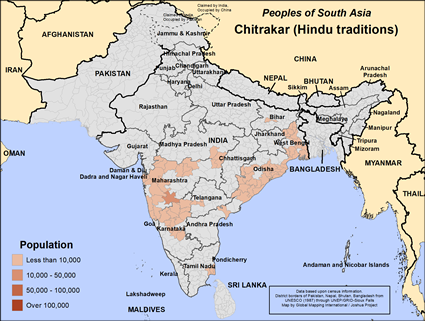
The Chitrakar, also known in some regions as Chitari or Chitrakathi, are a traditional artisan community found primarily in the Indian states of Maharashtra and Andhra Pradesh. Their name comes from a Sanskrit word meaning "picture maker" or "artist," reflecting their historic occupations of drawing, painting, carving, and crafting decorative objects. Many Chitrakar families have long been involved in producing painted wooden items, toys, religious images, and other artistic works for local communities.
The community's artistic heritage is part of India's long tradition of visual storytelling and craftsmanship. In western India, some Chitrakar groups have been associated with illustrated storytelling traditions, creating painted images used to communicate stories from Hindu epics, folklore, and local history. Artistic skills are typically passed from one generation to the next through family training and apprenticeship.
The Chitrakar of Maharashtra generally speak Marathi.
The Chitrakar are traditionally known as artisans and craftspeople. Many families have earned their livelihoods through carving, painting, decorating wooden objects, producing toys, and creating items used in homes, festivals, and religious ceremonies. These skills are often learned within the family, with children observing and assisting parents and grandparents from an early age.
Family life is central to Chitrakar society. Households often maintain close relationships with extended family members, and important life events such as marriages, religious festivals, and community celebrations strengthen social bonds. Property is commonly inherited through family lines, and traditional customs govern inheritance and marriage practices. Widowers and divorced men are generally permitted to remarry, helping provide stability for families after loss or hardship.
While some Chitrakar continue to work as artisans, many have adapted to changing economic conditions. Some operate small businesses, engage in trade, work in manufacturing, or seek employment in cities and towns. Younger generations increasingly pursue formal education and occupations beyond traditional crafts. Nevertheless, artistic creativity remains an important part of the community's identity.
Food and daily life largely reflect the regions in which they live. Rice, lentils, vegetables, and locally available foods form the basis of many meals. In Maharashtra, Konkani cultural influences are often evident, while Telugu-speaking Chitrakar families in Andhra Pradesh share many customs with neighboring Telugu communities. Religious festivals, family gatherings, and local celebrations provide opportunities for social interaction and reinforce community traditions.
Many Chitrakar take pride in preserving artistic skills that have been handed down through generations. Their work not only provides income but also helps preserve elements of India's cultural and artistic heritage. At the same time, economic pressures, competition from mass-produced goods, and changing consumer preferences can make it difficult for traditional artisans to sustain their craft as a primary source of income.
The Chitrakar follow Hinduism and participate in the religious life common to many Hindu communities. Their beliefs typically include devotion to various Hindu gods and goddesses, observance of religious festivals, temple worship, and participation in family and community rituals.
Because many Chitrakar have historically produced artistic and decorative items connected with religious traditions, Hindu stories, symbols, and ceremonies have played an important role in shaping their worldview. Religious observances often mark important events such as births, marriages, festivals, and funerals.
Like many Hindu communities, their religious practice may combine formal Hindu teachings with local customs and folk traditions. Rituals intended to seek blessings, protection, prosperity, and spiritual favor are often part of community life. Although they have access to some Christian resources in languages they understand, very few have encountered a clear presentation of the gospel or a vibrant Christian witness among their own people.
The Chitrakar have both practical and spiritual needs. Many artisan families face economic challenges as traditional handcrafted products compete with inexpensive factory-made goods. Access to quality education, vocational opportunities, healthcare, and sustainable economic development could help strengthen many households.
Spiritually, the greatest need is for a clear understanding of the gospel of Jesus Christ. Long-term relationships with Christians who respect their culture and understand their background could help create opportunities for meaningful gospel conversations and discipleship. As people come to know Christ, both individuals and families can experience the spiritual transformation that comes through a relationship with Him.
Pray that the Chitrakar people will be adopted through the People Group Adoption program so that sustained prayer, intentional engagement, and future gospel ministry will reach their communities.
Pray that Indian Christians and other believers will build meaningful relationships with the Chitrakar and faithfully share the good news of Jesus Christ with them.
Pray that a deep spiritual hunger will arise among the Chitrakar, leading many to seek Jesus Christ and follow him no matter what the cost.
Pray that God will provide improved educational opportunities, healthcare services, economic stability, and support for families whose livelihoods depend on traditional crafts.
Scripture Prayers for the Chitrakar (Hindu traditions) in India.
https://en.wikipedia.org/wiki/Chitrakar
https://folkart.org/chitrakars-naya/
https://homegrown.co.in/article/800222/pattachitra-the-almost-lost-folk-art-of-odhisha-west-bengal
| Profile Source: Joshua Project |





