




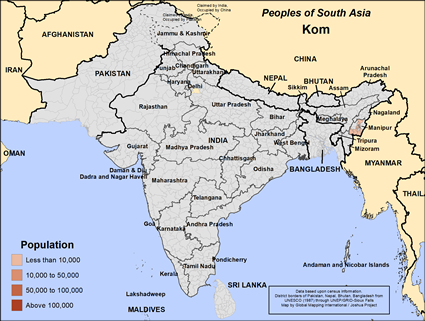
The Kom are a small indigenous tribal group primarily found in the northeastern Indian state of Manipur, with some communities in neighboring states like Assam, Tripura, and Mizoram. The Kom are recognized as one of the scheduled tribes of Manipur and are part of the larger Kuki-Chin-Mizo ethnolinguistic family. Traditionally, the Kom trace their origins to ancient migrations from the east, sharing cultural and linguistic ties with other Kuki-Chin groups. Their history is marked by resilience, as they have maintained their distinct identity despite pressures from larger neighboring communities and the challenges of modernization.
The Kom people predominantly live in rural hill villages, where agriculture is the mainstay of their economy. They practice shifting cultivation (jhum) and grow crops such as rice, maize, and vegetables. Animal husbandry and small-scale trade also contribute to their livelihood. Kom villages are typically close-knit, with strong community bonds and a tradition of collective decision-making. Social life revolves around clan structures, festivals, and communal activities. Traditional attire, folk songs, and dances are important aspects of their cultural expression. While education levels are improving, many Kom youth migrate to urban centers for better opportunities, which sometimes leads to a gradual erosion of traditional customs.
Historically, the Kom practiced animism, with a belief system centered on nature spirits, ancestors, and local deities. Rituals and festivals were conducted to ensure good harvests, health, and protection from harm. In the early 20th century, Christian missionaries arrived in the region, and today, the vast majority of Kom people identify as Christians, predominantly Protestant (Baptist and Presbyterian). Churches play a central role in community life, and Christian festivals and practices have largely replaced traditional rituals. However, marginalism is a real problem.
The Kom community faces several challenges, including limited access to quality education, healthcare, and economic opportunities. Many villages are in remote, hilly areas with poor infrastructure, making development difficult. There is a need for sustainable agricultural practices and alternative livelihoods to reduce poverty and migration. Preservation of the Kom language and cultural traditions is also important, as younger generations are increasingly influenced by mainstream culture. Spiritual needs include continued discipleship, leadership development, and resources for holistic community transformation.
Pray for spiritual growth and unity among Kom believers, and for strong, wise leaders in their churches.
Ask God to provide improved access to education, healthcare, and sustainable economic opportunities for Kom families.
Pray for the preservation and celebration of Kom language and cultural heritage.
Intercede for peace and harmony in areas where the Kom live, especially in the face of social or ethnic tensions.
Pray that the gospel would continue to transform lives and bring hope to the Kom community.
Scripture Prayers for the Kom in India.
https://en.wikipedia.org/wiki/Kom_people
https://www.indianculture.gov.in/tribes/kom
https://www.ethnologue.com/language/kmm
https://www.peoplegroups.org/explore/GroupDetails.aspx?peid=42513
AI generated by Gospel Flow
| Profile Source: Joshua Project |




