




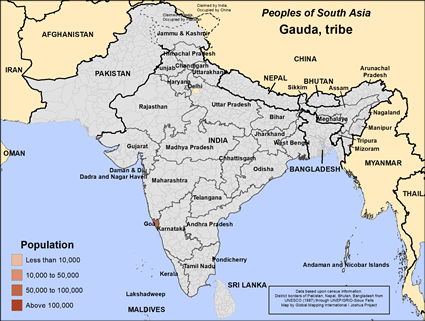
The Tribal Gauda, also known as Gauda or Gawda, are considered among the original inhabitants of the Konkan region, particularly in Goa, but also found in parts of Karnataka, Odisha, and Andhra Pradesh. Their history is marked by deep roots in the land, with a strong tradition of agriculture and village governance. During Portuguese colonial rule in Goa, many Gaudas converted to Roman Catholicism, while others retained their Hindu faith. In the 1920s, a movement known as the Shuddhi movement led some Catholic Gaudas to return to Hinduism, forming a distinct group called the Nav-Hindu Gaudas. The community has faced challenges related to social acceptance and identity, especially for those who changed religious affiliation. Despite these changes, the Gaudas have preserved many of their traditional customs and continue to play a vital role in the cultural fabric of Goa and neighboring regions.
The Tribal Gauda community is primarily rural, with most members engaged in agriculture, cultivating rice and other crops, or working in the tourism industry in Goa. Their villages are characterized by close-knit social structures, with extended families and community participation in festivals and rituals. Women play an active role in both economic and social life, often working alongside men in the fields and participating in community decisions. The Gaudas maintain unique customs in marriage, favoring endogamous unions and sometimes practicing cross-cousin marriages. Their homes and daily life reflect a blend of indigenous traditions and influences from centuries of interaction with other cultures, especially during the Portuguese era. Community events, folk dances, and religious festivals are important aspects of their social life.
The Gauda community is religiously diverse. Many are Hindu, worshipping deities such as Lord Malikkarjun (a form of Shiva) and participating in local festivals and rituals. Ancestor worship and annual ceremonies are also significant in their spiritual life.
A substantial number of Gaudas are Roman Catholic, a legacy of Portuguese missionary activity. These Catholic Gaudas often blend Christian practices with traditional customs, celebrating both church festivals and indigenous rituals. The Nav-Hindu Gaudas, who reconverted to Hinduism in the 20th century, sometimes face challenges regarding caste acceptance and social integration. Despite religious differences, the community as a whole values its cultural heritage and maintains a strong sense of identity.
The Tribal Gauda community needs greater social acceptance and unity, especially for those who have changed religious affiliation and face challenges of identity and belonging. There is a need for improved access to education and healthcare, particularly in rural areas where resources are limited. Economic development initiatives that support sustainable agriculture and provide alternative livelihoods can help address poverty and underemployment. The community also needs support in preserving its language, traditions, and cultural practices, which are at risk due to modernization and migration. Legal advocacy and awareness are important for protecting land rights and ensuring fair treatment in matters of social and political representation.
Pray for those who follow Jesus Christ to evangelize and disciple those who lack hope.
Ask God to provide opportunities for education, healthcare, and economic advancement for Gauda families.
Intercede for justice and protection of land rights, and for wise leadership within the community.
Pray that the love of Christ would be made known among the Gauda, bringing spiritual awakening and hope.
Scripture Prayers for the Gauda, tribe in India.
https://en.wikipedia.org/wiki/Gauda_and_Kunbi
https://tribalnewsindia.com/?page_id=1690
https://swadesi.com/the-gowda-tribe-of-goa/
https://goa.pscnotes.com/goa-geography/scheduled-tribes-of-goa/
AI generated by Gospel Flow
| Profile Source: Joshua Project |




